Last week we looked at the Dart, which set up the foundation for bigger things for Dennis. That came in Feb 1999 - when the first Tridents were delivered to Stagecoach East London. For the next decade, Dennis (and its successors) would build more 2-axle Tridents than all other Dennis double decker types built over the years (yes, that include all 3-axle Tridents). Along with the runaway success of the Dart, the Trident properly cemented Dennis' position as the leading British bus builder. So, let's have a look at this remarkable type over the past decade.
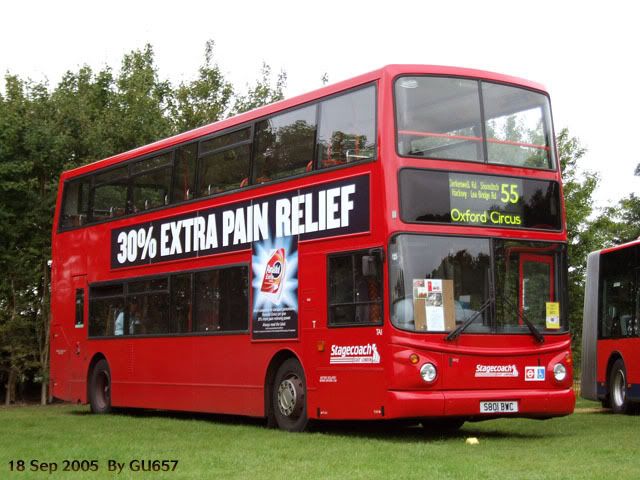
Now in semi-preserved status, 10-year old East London TA1 is one of the first Tridents to be delivered for service in London (with the then Stagecoach East London). It is a compact design, sharing the front module with its tri-axle sister. Beyond that, it has a transverse mounted engine, giving a short rear overhang and a full low-floor layout that the tri-axle Trident lacks.
Its compact design appeals many major operators and, with Volvo's failure to offer comparable product at that time, draws in a number of high-profile customer who used to operate fleets of Volvo Olympians, then the leading double decker in Britain. The highest profile of all is, of course, Stagecoach, which moved from Olympian to Trident as their standard double decker:
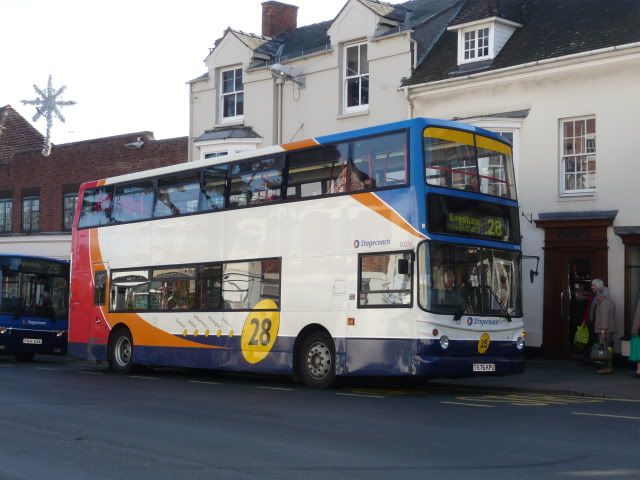
Partly because its owner is a key shareholder of ADL, Stagecoach would become the most loyal customer of Trident over the years, taking over a third of the production over the years, including large number of ALX400-bodied examples, and a much lesser number of Presidents:
... and of course they added more examples through takeover of other operators:
Other early Trident customers include Oxford Bus Company of Go-Ahead Group:
...and Nottingham City Transport. However, NCT last Tridents would come in 2001, and the operator would turn their back from Dennis and order Scanias instead.
Another early customer is the well respected Lothian Bus, which took up 168 Tridents between 1999 and 2004. It is also the most enthused user of the longest, 11.4m version. However, like NCT, Lothian turned its back from Dennis from 2005 and ordered Volvos instead.
Tridents also proved popular with municipal operators, such as Blackpool Transport as well, who, traditionally, prefer British types. Almost all municipal examples received East Lancs bodywork:
However, it did not do so well in the export market. The key examples are these in Madrid, which later would move on to Barcelona instead:
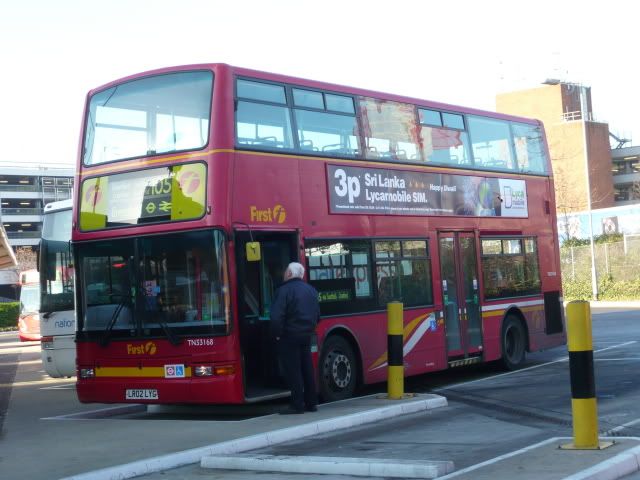
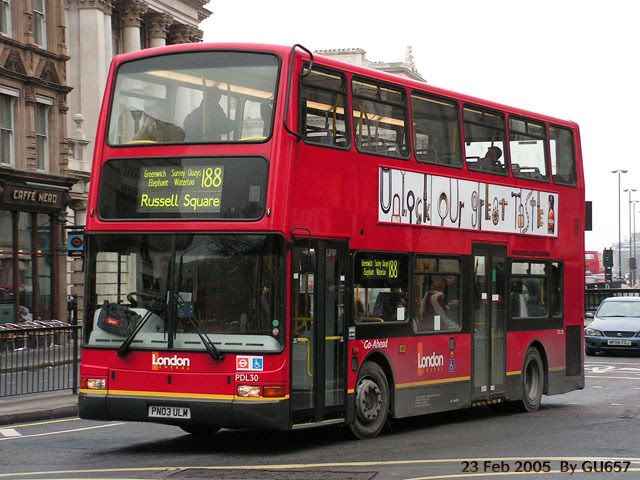
The most important market is, of course, London, which has around 2,000 of the type in service. First, despite its general preference of Volvos, is a prominent Trident user in London:
...and to a much lesser degree, Go-Ahead London, who are in progress of disposing their whole fleet of 50 examples. The short variety (10.1m) is not popular outside London, but are chosen in the capital for their compactness.
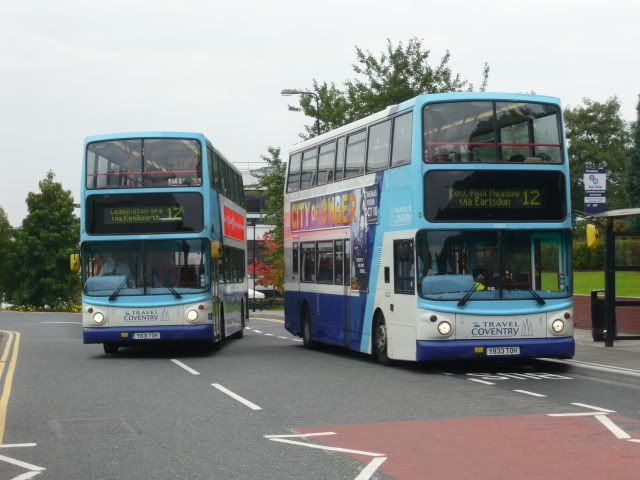
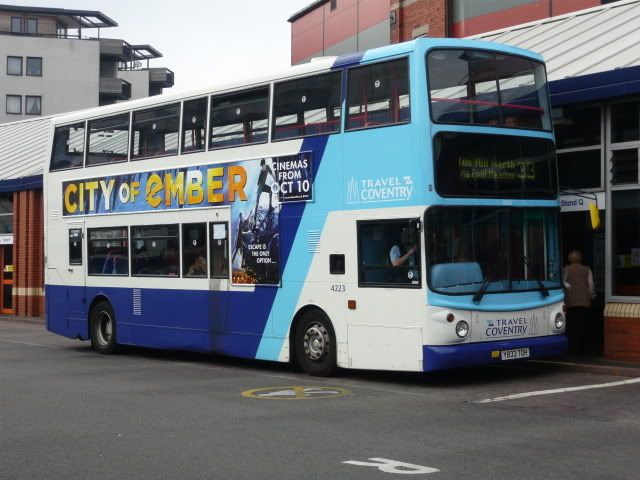
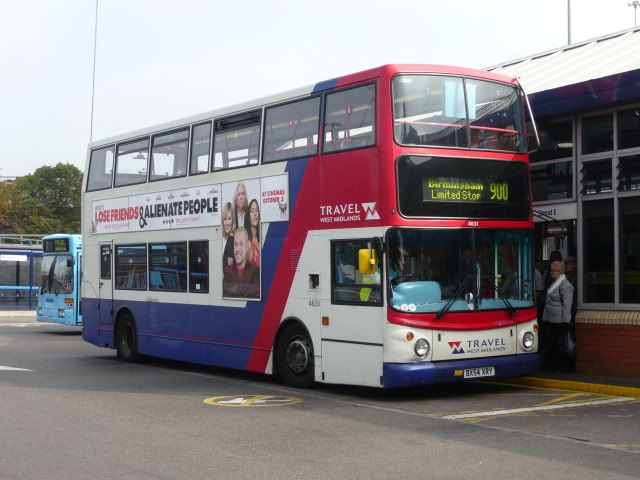
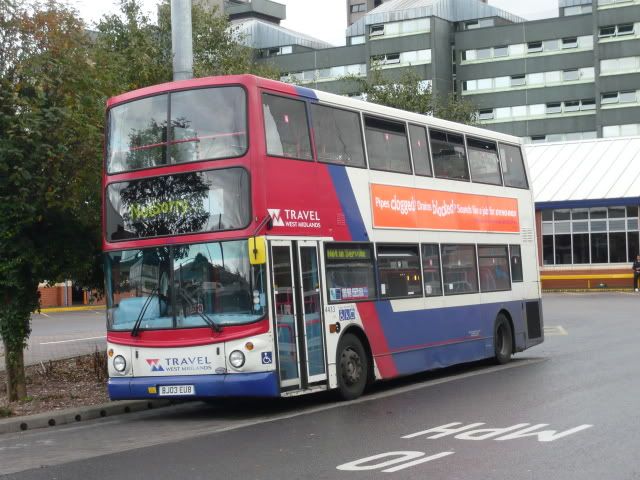
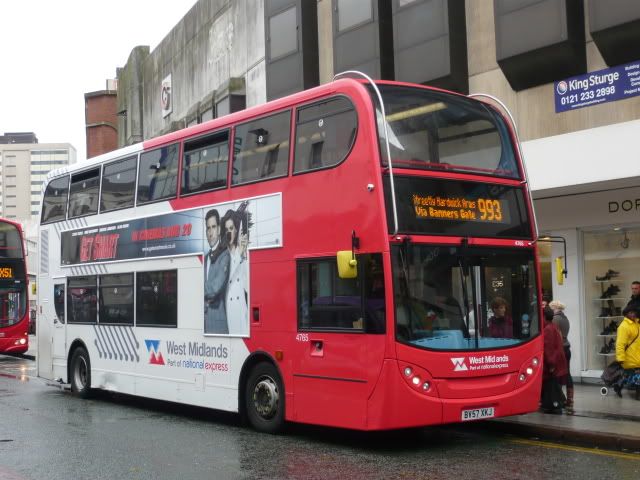
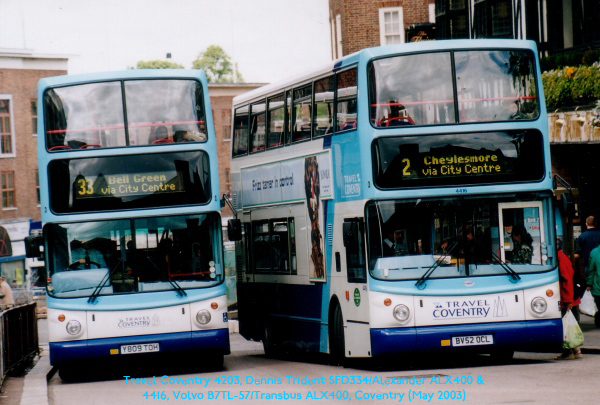
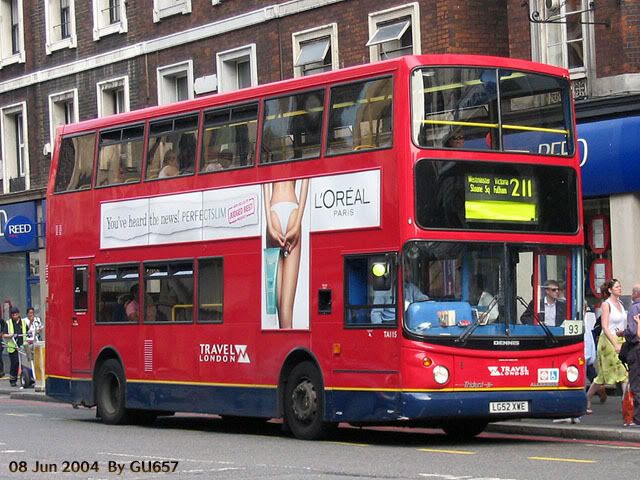
A late Trident customer is Travel West Midlands (and its sister company, Travel Coventry), who, prior to ordering their first Tridents in 2001, took batches of DB250LFs and B7TLs. They would eventually dual-source their double deckers with Dennis and Volvo, acquiring hundreds of Tridents and B7TLs over the years:
As Trident moves on to Euro 4 standard, ADL also repackage and offer the type as an integral vehicle, the Enviro 400:
The E400 would, helped very much by the Volvo ban in London, take up much of the London orders since 2006:
Personally, I prefer the 2-axle Trident much better than the 3-axle version. The design is more compact, its full low-floor layout provide a better cabin, and the ride is better as well. With the Enviro 400 due in HK soon, it will be interesting to see how it works out.
That's one (and the easiest) way, but there or other ways to distinguish them as well, which I should illustrate with a picture. The one on the left is a Trident and the other one is a B7TL, spot the differences?
smal: I'm doing to 2-axle Tridents not 3-axle mate!!!
That's only possible for early B7TLs. Late production B7TLs have a new dashboard and they are a bit more difficult to tell from a Trident.
One major difference, althought not easy to tell at first glance, is the size of the front blind box. Standard height Trident always has a taller blind box than the B7TL (and the Low height Trident always has a much shorter one). I don't know why they were built like that, but this is a useful way to tell a B7TL from a Trident without looking at the radiator.
That's only possible for early B7TLs. Late production B7TLs have a new dashboard and they are a bit more difficult to tell from a Trident.
One major difference, althought not easy to tell at first ...
It is also possible to distinguish them from the rear side.
B7TLs have taller engine covers than Tridents. Also the window of the lower deck
at the rear side for B7TLs has round corners, while that for Tridents has square
corners.
It's not difficult to distinguish between them if you pay more attention .
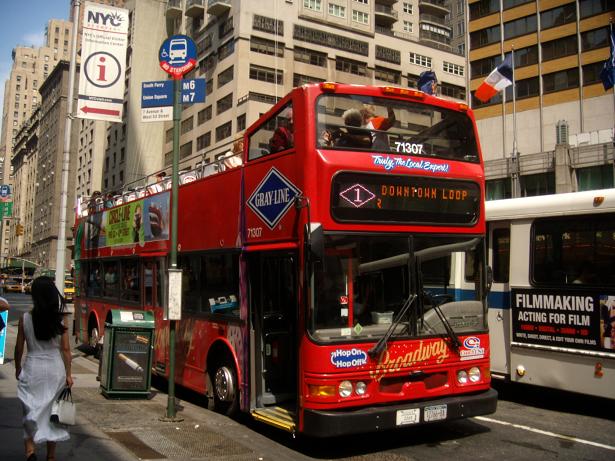
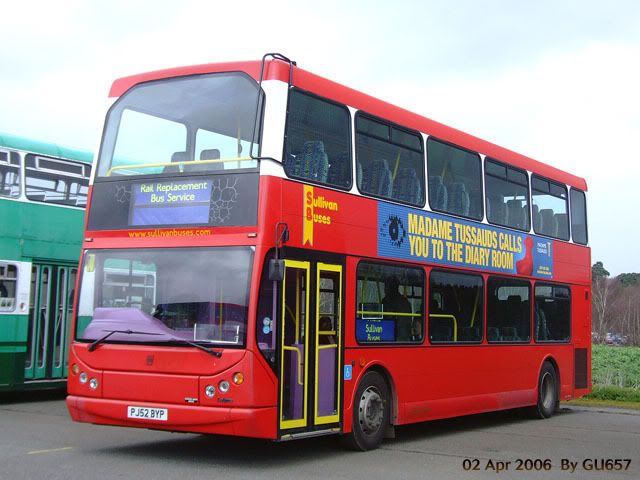
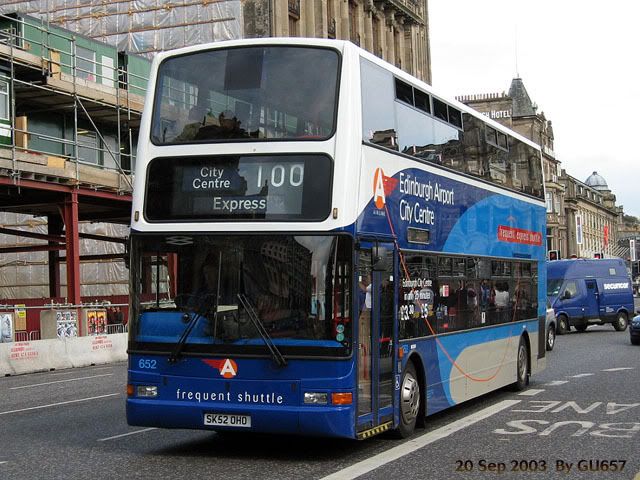
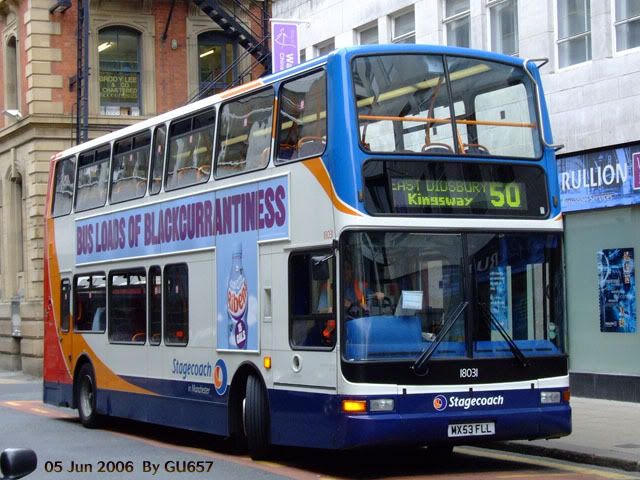
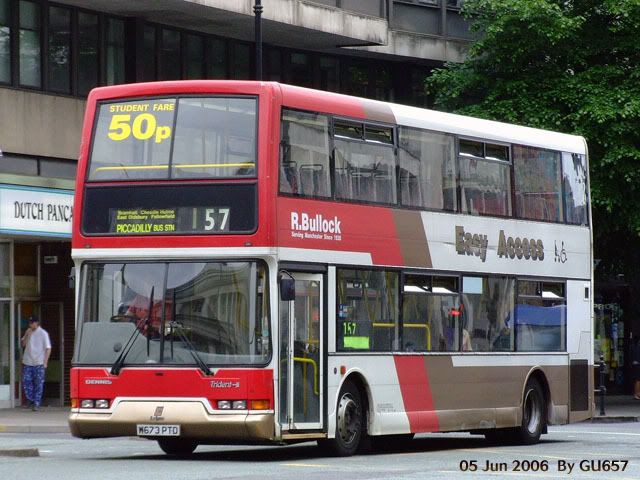
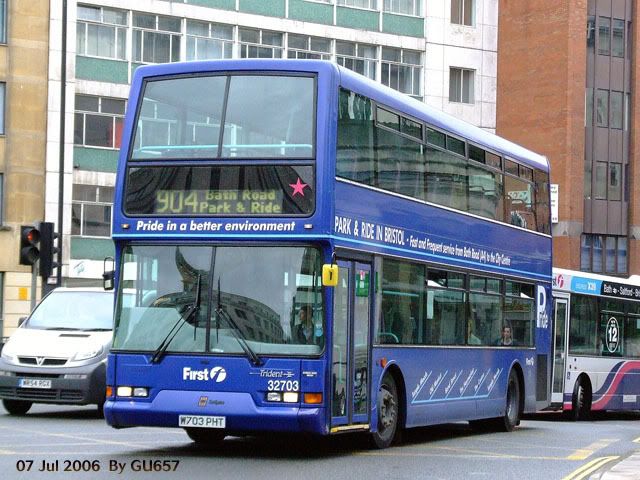
Here also comes part of my collections of 2-axle Trident photos:






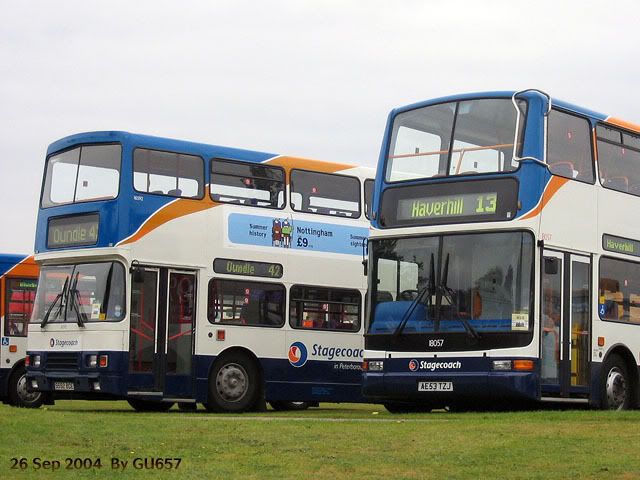
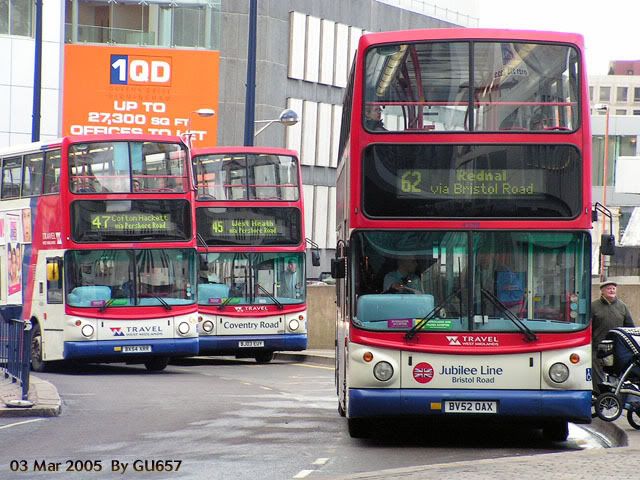
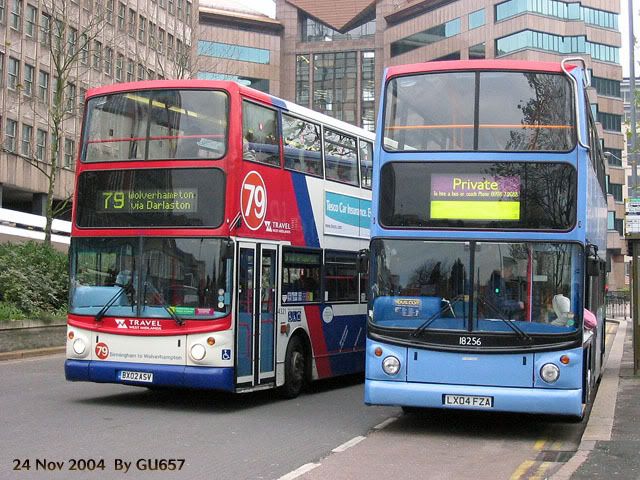
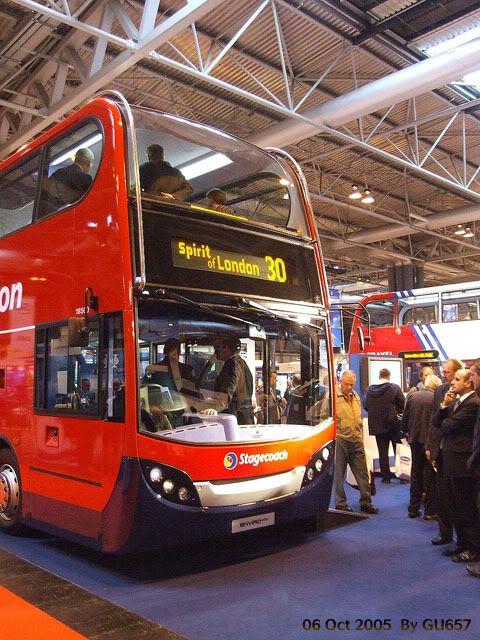


 .
.